From December 25 to 26, the 6th High-Level Forum on Foreign Language Disciplines for Finance and Economics Universities, organized by the Finance and Economics Universities Committee of the China University Foreign Language Disciplines Development Alliance and hosted by the School of Foreign Studies at Jiangxi University of Finance and Economics (JUFE), was convened on campus. Co-organized by the Jiangxi Provincial Foreign Language Association, Foreign Language Teaching and Research Press, Yanxing International Education, and Beijing Xueyanhuizhi Network Technology Co., Ltd., the forum centered on the theme “Innovation and Transformation of Foreign Language Disciplines in Finance and Economics Universities in the AI Era,” featuring seven keynote speeches, editors’ sharing sessions, and four parallel sub-forums that drew nearly 140 scholars, education administrators, and industry representatives nationwide to chart the future course for foreign language disciplines. 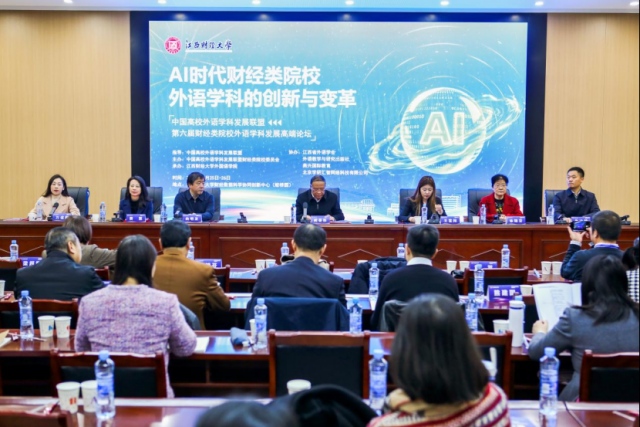
01 Opening Remarks: Focusing on Disciplinary Mission in the AI Era
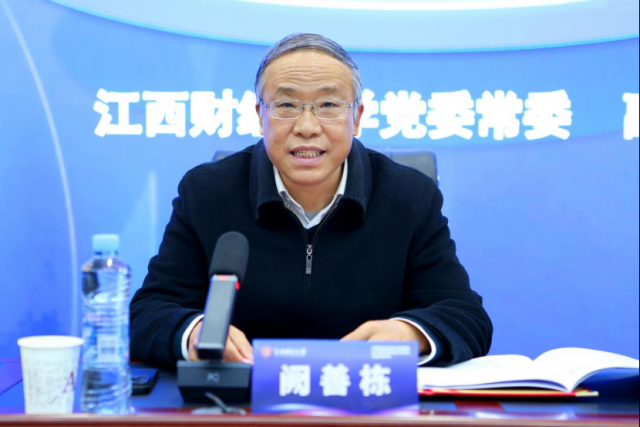
Vice President Shandong Que delivered the opening address, extending a warm welcome to all delegates while highlighting the university’s three strategic transformations and accomplishments in talent cultivation. He pledged to advance deep interdisciplinary integration and strategic synergy between foreign language studies and JUFE’s core disciplines, encouraging the field to transcend traditional language and literature boundaries and actively engage in cutting-edge research and pedagogy spanning the digital economy, international communication, global governance, and area studies, thereby pioneering innovative pathways for foreign language education transformation in the AI age alongside peer institutions. 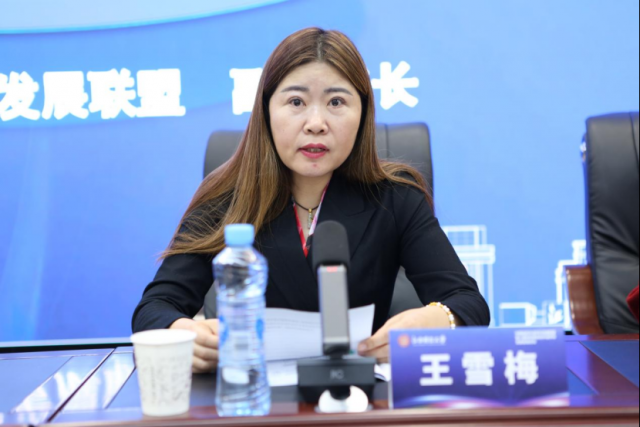
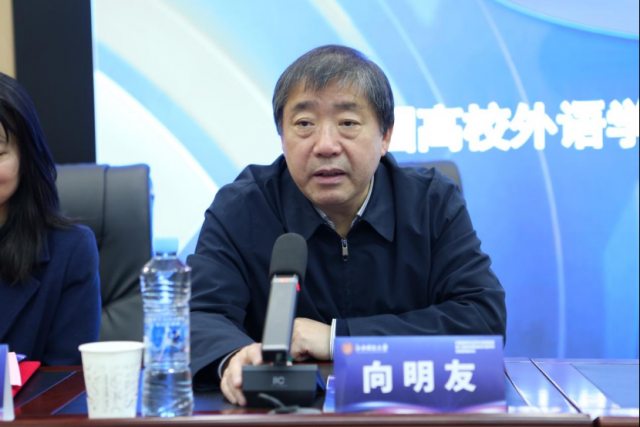
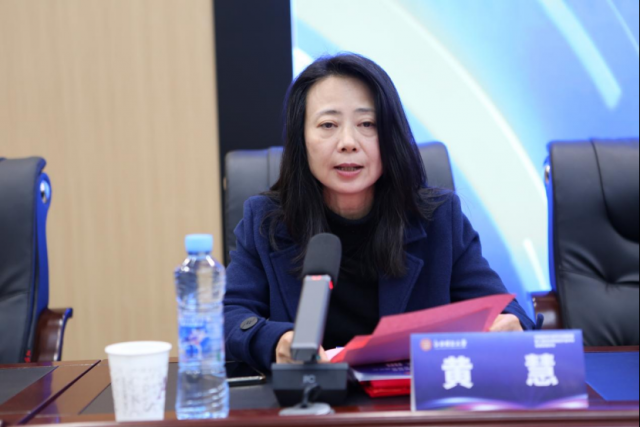
Xuemei Wang , Deputy Secretary-General of the Alliance, Mingyou Xiang, Director of the Finance and Economics Universities Committee, and Hui Huang, President of the Jiangxi Provincial Foreign Language Association, also addressed the assembly. Experts underscored the pivotal role of foreign language disciplines in finance and economics universities in advancing the Belt and Road Initiative, constructing international communication discourse systems, and nurturing interdisciplinary talents, urging participants to leverage this forum to deepen cross-institutional collaboration and propel high-quality disciplinary development. The opening ceremony was chaired by Yina Wan, Dean of the School of Foreign Languages. 02 Keynote Speeches: AI-Enabled Innovation in Foreign Language Education 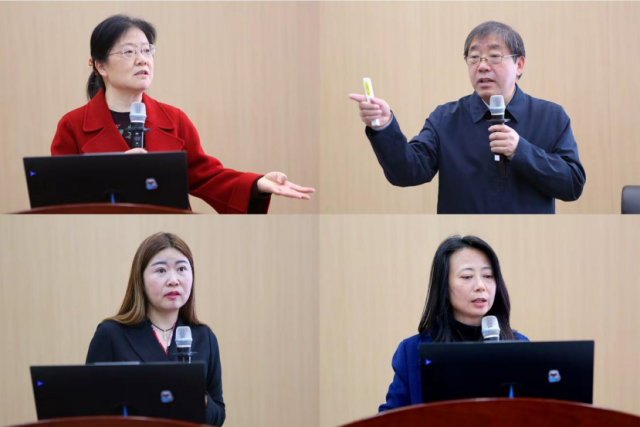
Professor Jinfen Xu from Huazhong University of Science and Technology dissected challenges confronting foreign language teacher professional development in finance and economics universities through a sociocultural theory lens. She identified insufficient digital literacy and role identity crises as primary obstacles, proposing AI-empowered teacher learning communities as a breakthrough solution. Professor Mingyou Xiang, Dean of the School of International Studies at the University of International Business and Economics, advocated for the integration of “scientific research, education, and management” in talent cultivation. He critiqued the disconnect among teaching, research, and administration in current business English programs, stressing the need to build a collaborative ecosystem via optimized resource allocation, evaluation mechanism reform, and teaching team restructuring. Professor Xuemei Wang from Shanghai International Studies University zeroed in on digitally empowered teacher research literacy development, showcasing innovative AI tool applications in teaching. Her proposed “teacher-AI-student” tripartite collaborative classroom model offers an actionable pathway for enhancing teacher capabilities. Huang Hui, President of the Jiangxi Provincial Foreign Language Association, delivered an analysis of digital literacy among Chinese university foreign language teachers in the AI era, emphasizing that educators must proactively master intelligent teaching platforms and generative AI while grounding technological integration in disciplinary characteristics and professional needs, upholding academic integrity and data security to preserve the educational essence amid technological application. 03 Disciplinary Frontiers: Teaching and Research Innovation from Editors’ Perspectives 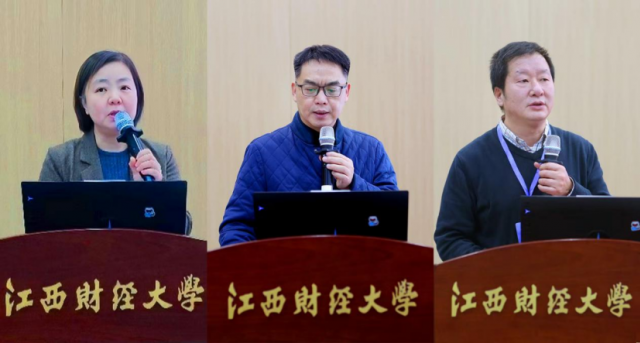
Ying Sun, Editor-in-Chief of Foreign Language Research, addressed AI-enhanced national foreign language talent cultivation, noting that traditional programs overemphasize linguistic skills while neglecting cultural comprehension. She advocated curriculum adjustments to cultivate “leveraged” international talents who comprehend foreign languages, foreign nations, and China while maintaining personal commitment. Shaohua Chang, Deputy Editor-in-Chief of Foreign Languages in China, articulated a framework based on five elements: education, embodiment, generation, medium, and innovation. He proposed that next-generation textbooks should enhance digital intelligence features, dynamic updating mechanisms, and multi-modal interactive functions to meet AI-era demands. Yonggang Zhao, Deputy Editor-in-Chief of Foreign Language Education, shared insights on specialized foreign language paper writing and journal publication in the AI context, offering scholars guidance on research paradigm selection, structural norms, journal matching strategies, and peer review navigation. 04 Practical Exploration: Innovative Cases from Parallel Forums 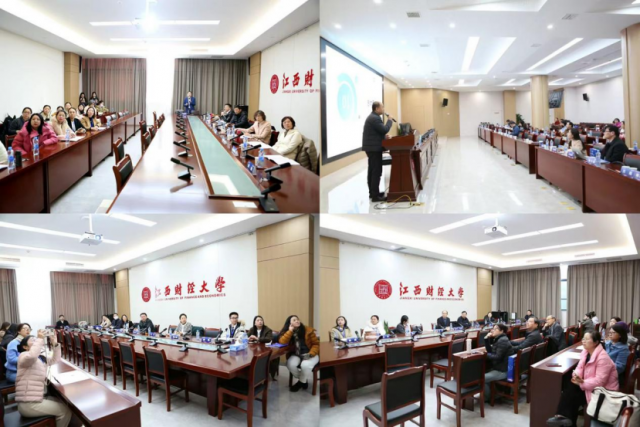
Representatives from the University of International Business and Economics, Shanghai University of Finance and Economics, Zhongnan University of Economics and Law, Southwestern University of Finance and Economics, Capital University of Economics and Business, Zhejiang Gongshang University, and other institutions deliberated on AI-driven foreign language disciplinary paradigm reconstruction, modeling core competencies for digitally savvy business foreign language talents, reconfiguring human-machine collaborative curriculum and teaching systems, and AI-enabled school-enterprise cooperation for innovative industry-education integration. They explored pioneering practices in cultivating interdisciplinary foreign language talents. Multiple JUFE faculty members also shared the School of Foreign Languages’ transformation approaches and achievements in digital textbook compilation, global competence development, and national first-class undergraduate program construction. 05 Forum Closing: Building Consensus and Creating the Future 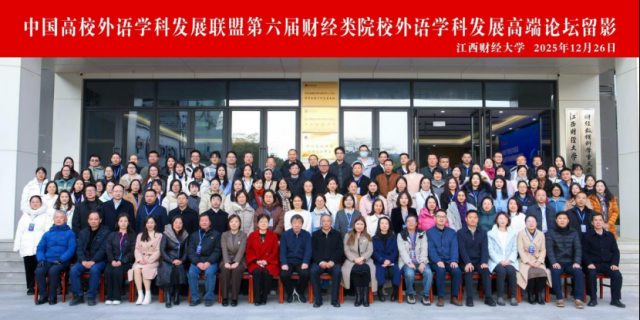
The closing ceremony was chaired by Juebin Lu , Party Secretary of the School of Foreign Languages. Mingyou Xiang delivered the concluding remarks, expressing high appreciation for JUFE’s meticulous preparation and noting that disciplinary innovation in the AI era must uphold the fundamental task of “cultivating virtue and nurturing talent,” leverage digital intelligence technology, and deepen interdisciplinary integration and industry-education synergy. The four parallel sub-forum moderators presented summary reports. Professor Xiaomei Qiao from Shanghai University of Finance and Economics spoke on behalf of the next host institution. Anchored at the frontier of AI-era transformation, the forum aggregated nationwide explorations and practices from foreign language disciplines in finance and economics universities. Through intensive deliberations, it forged a consensus centered on “digital intelligence empowerment, interdisciplinary convergence, and industry-education collaboration.” The outcomes provide both theoretical guidance and practical benchmarks for disciplinary innovation while clarifying functional positioning in serving national strategies. These achievements will further stimulate internal disciplinary momentum, deepen talent cultivation reform through tradition-upholding innovation, and foster cross-disciplinary, cross-institutional, and cross-sectoral resource sharing and ecosystem co-construction via open synergy, injecting strong push into building a distinctive, future-oriented foreign language education system for finance and economics universities. On the evening of December 25, the Standing Council of the Finance and Economics Universities Committee convened, reviewing forum preparations, discussing the next forum's bidding, and exchanging views on compiling specialized foreign language digital textbooks and constructing virtual teaching and research offices for understanding contemporary China. (Translated by Ming Chen, Shanjun Zhang)
|


